How do aircraft fly?
How do pilots control them?
What is an aerodynamic shape?
Students will learn to fly as they learn all the answers with our Elementary Aircraft Aerodynamics Lab. SoCal STEM carnival has developed several hands on activities that will teach students flight engineering. Students will learn the basic physics and components of flying airplanes including: Lift, low pressure areas, airfoils, wing design, and introductory aerodynamics. This lesson and accompanying activities are safe and designed to immerse students in their own learning experience all the while expanding their knowledge about the physics that make flying possible.
Elementary Aircraft Aerodynamics Lab
Lesson Centers
Lesson Centers
-
Students will enjoy a short lesson video that covers the essentials of flight. Including historical figures, flight controls, the mechanics of lift, importance of balanced forces, and speed. Each topic is re-enforced by the following centers.
-
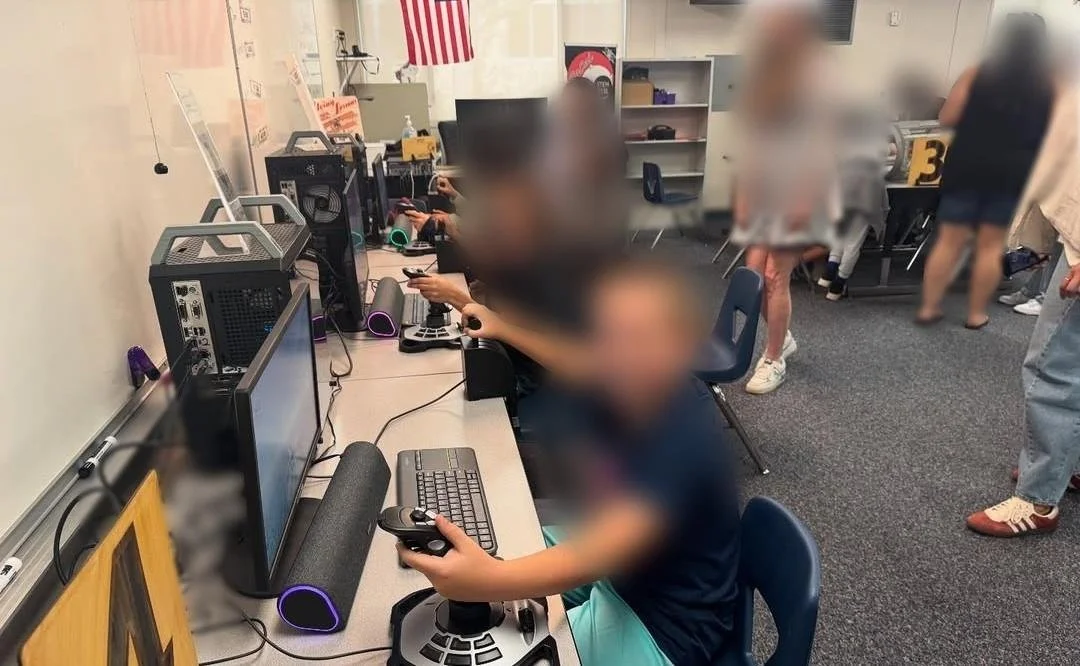
Students will be able to practice flying, and for an extra challenge, landing a variety of aircraft around the Inland Empire. Students be practicing the same motions, and manipulating similar controls to professional aviators. Our simulators are equipped with AMD Ryzen processing and legendary Nvidia Ti Graphics for a dynamic flight experience in your classroom.
-
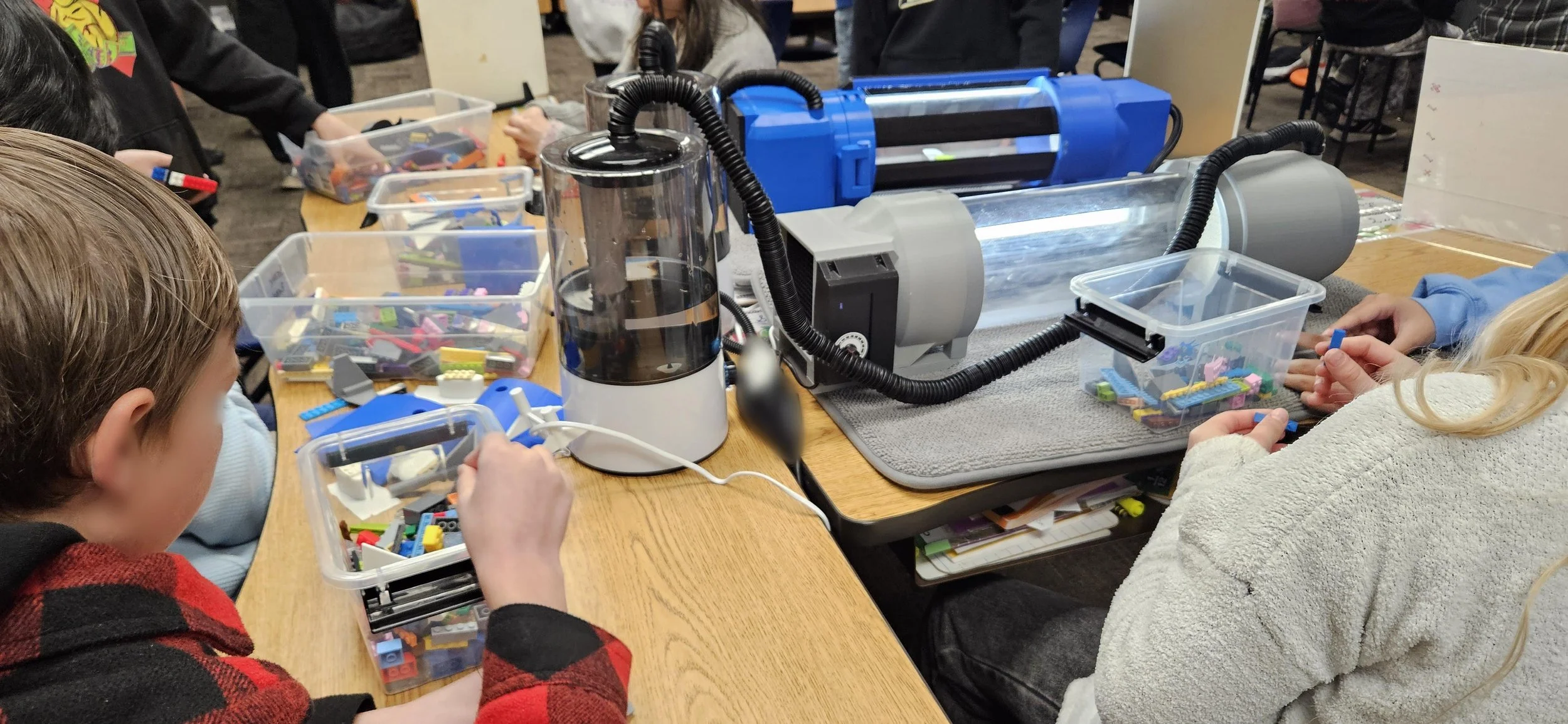
Students feel wind every day, but seeing air is another story! In this activity, students will be treated to the many movements of air around their custom aircraft in our wind tunnels! Our EVO wind tunnel helps students visualize airflow around various shapes. Students will create, observe, and compare the airflow around their designs.
-
Students will create their own aircraft with a variety of wing components in a few easy steps. They will need to choose between different wing shapes to build an aircraft. When they are finished, they’ll experiment with weight and wind speed to decipher the lifting capacity of their creation.
-
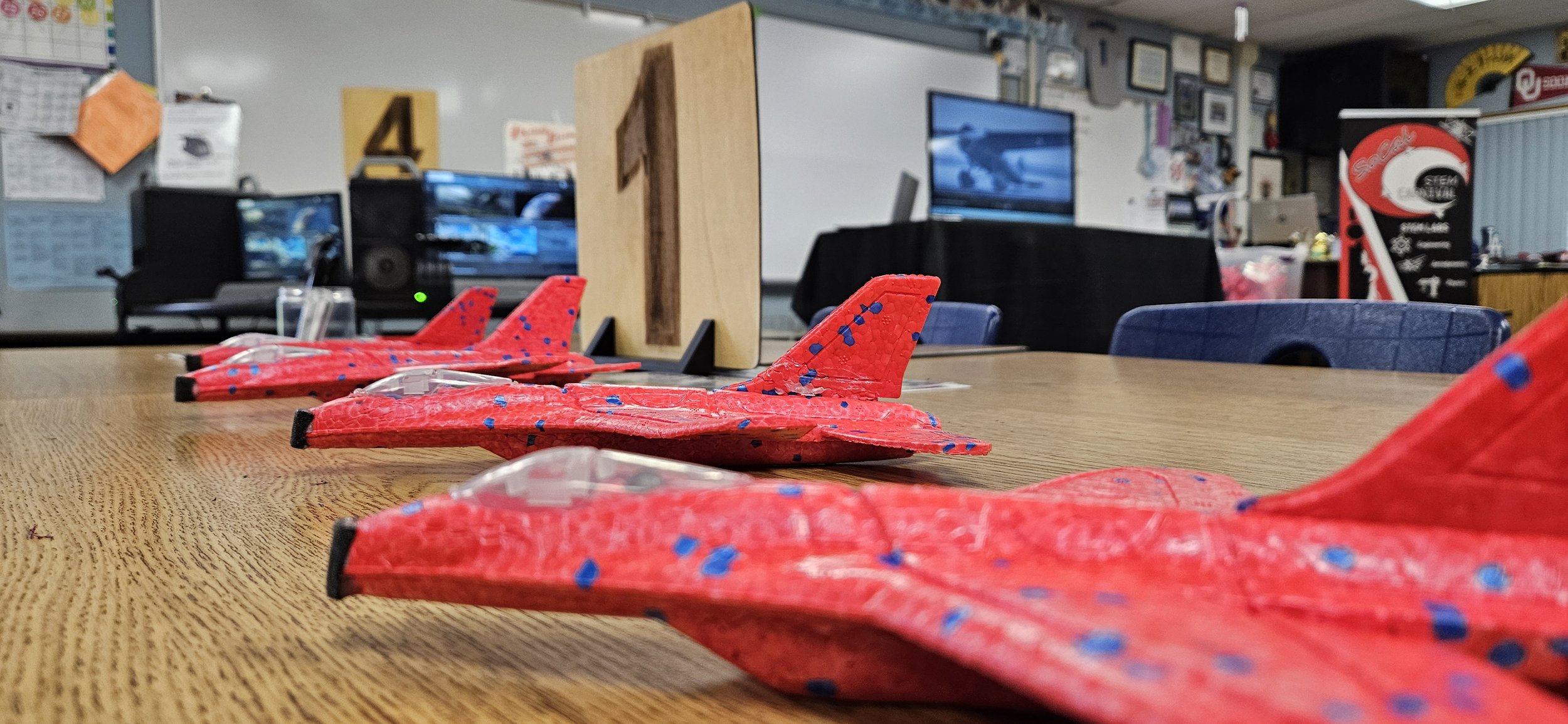
Students will master the air while they master their math skills with our glider game! Students will be flexing their math abilities for extra points in this friendly competition.
-
Student time -Approximately 3 hours, this is perfect for 3 separate groups of ~24 students, or an after school program. 10 Minute passing periods between class groups is recommended.
Set up time - 1 Hour is needed prior to first students’/ class arrival.
CA NGSS Standards
ETS1.A: Defining and Delimiting Engineering Problems (ETS1 -1,2,3)
PS2.A: Motion and Stability (3-PS2-1) (K-PS2-2)
1- PS4-1 through 3: Cause and Effect
Lab Timing - A full lab includes 5 centers (Learn, Fly, Design, Engineer, and Compete) at about 10 minutes each. Student counts over 24 (6 per center) . Each full lab is approximately 55 minutes.
Supervision School/Campus must provide supervision via valued teachers or proctors.
Lab Centers are best suited for groups of 24-30 students at a time and Ideal for grade levels 2-6.
**Fewer students may be sent, (Admin discretion)
**Custom class sizes, grade level combinations, or other participants are per Admin’s Discretion.
Lab centers include 3 Simulators and associated hardware, 2 Water powered fog tunnels, 1 turbofan wind tester with associated building materials, Gliders and Glider net targets.
Electrical Note: Peak (Max) load of 15A intermittently.
Location - A classroom sized indoor area is preferred, electricity is required.
Fire lane/ vehicle access near classroom is required to expedite set up.